
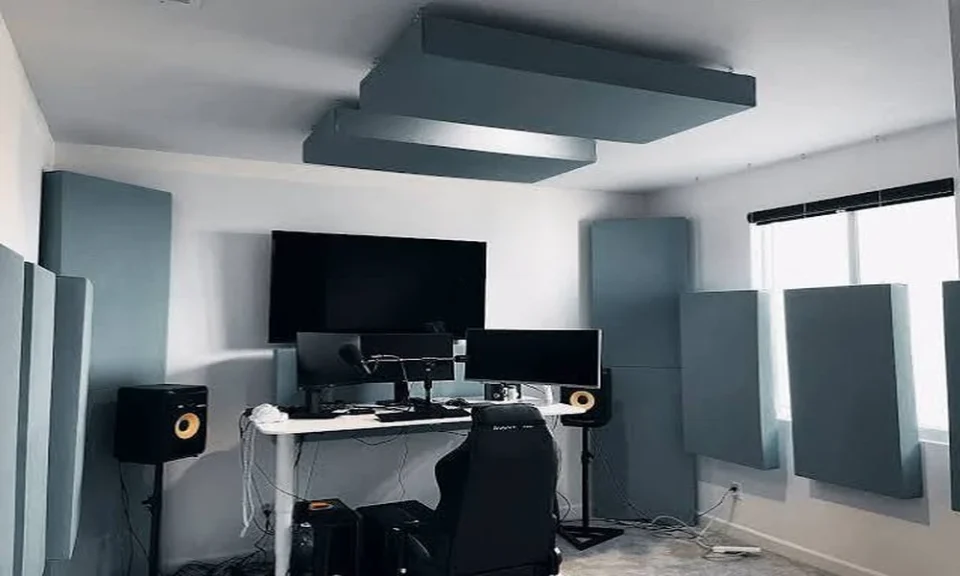
If you’ve ever sat in a room where conversations feel slightly unclear or sounds seem to bounce around more than expected, you’ve already experienced why acoustic treatment matters.
In Singapore, this tends to come up quite often. Homes, offices, and commercial spaces are designed to make the most of limited space, which usually means more hard surfaces, open layouts, and closer proximity between rooms. All of that affects how sound behaves.
Before jumping into acoustic treatment, it’s worth understanding a few key things. It’s not just about adding panels. It’s about making sure the solution actually fits your space.
Start With What You’re Trying To Fix
The first step isn’t choosing products. It’s identifying the issue.
- Are you dealing with echo that makes speech less clear?
- Does sound travel too easily between different areas?
- Is the space becoming uncomfortable when multiple people are talking at once?
Acoustic treatment works best when it’s targeted. Without a clear problem, it’s easy to install panels that don’t make much difference.
Understand What Acoustic Treatment Can And Can’t Do
There’s often confusion between soundproofing and acoustic treatment.
Acoustic treatment improves how sound behaves within a space. It reduces reflections, improves clarity, and helps create a more balanced environment.
It doesn’t completely block sound from entering or leaving a room. If noise is coming from neighbours or external sources, additional measures like structural changes may be required. Knowing this upfront helps set realistic expectations.
Look At Your Existing Materials
Take a quick look around your space.
Hard surfaces like glass, tiles, and concrete reflect sound strongly. Soft materials like curtains, carpets, and upholstered furniture help absorb it.
If your space leans heavily towards hard finishes, acoustic treatment will have a bigger impact. If there are already soft elements, you may only need targeted improvements.
This simple assessment helps guide how much treatment is actually needed.
Placement Matters More Than People Expect
One of the most common mistakes is focusing on how panels look rather than where they’re placed.
Acoustic panels need to go where sound reflections are strongest. This is usually:
- Walls at ear level
- Ceilings above key activity areas
- Large, flat surfaces with minimal interruption
Placing panels randomly or purely for design reasons often leads to underwhelming results.
Even a small number of panels can be effective when positioned correctly.
Consider How The Space Is Used Daily
Different spaces have different acoustic needs.
- A home living room may need a balanced environment for conversation and entertainment.
- A home office requires better focus and speech clarity for calls.
- A meeting room depends heavily on clear communication.
- A restaurant needs to manage overall sound levels as it fills up.
Understanding how the space is used helps determine the type and amount of treatment required.
Don’t Overlook The Ceiling
Ceilings are often ignored, but they play a big role in sound reflection.
In many Singapore interiors, ceilings are flat and made from hard materials. Sound reflects off them and spreads across the room.
Adding ceiling panels or acoustic clouds can make a noticeable difference, especially in larger or more open spaces.
Even partial ceiling treatment can improve overall balance.
Be Mindful Of Space Constraints
Space is a key consideration in Singapore.
Rooms are often compact, and there isn’t always room for bulky solutions. This is where slimmer panels, wall-mounted options, or ceiling treatments become more practical.
Acoustic treatment doesn’t have to take up a lot of space. It just needs to be placed thoughtfully.
Balance Performance With Design
Acoustic panels are visible, so design matters.
The good news is that modern panels come in a wide range of styles. They can blend into the background or act as subtle design features.
It’s possible to improve acoustics without making the space feel overly technical or out of place.
The key is to consider both function and appearance from the start.
Start With A Manageable Setup
You don’t need to treat the entire space at once.
In many cases, it’s better to start with key areas and see how the room responds. From there, you can add more panels or adjust placement if needed.
Acoustic treatment often works best as a gradual process rather than a one-time installation.
When To Seek Professional Input
For more complex spaces, professional advice can be helpful.
This is especially true for:
- Large open-plan offices
- Commercial environments
- Spaces with persistent acoustic issues
Professionals can assess the space and recommend targeted solutions based on how sound behaves within it.
For smaller spaces, simple observation and basic planning are often enough.
Signs Your Acoustic Treatment Is Working
Once installed, there are a few clear indicators that your setup is effective:
- Conversations feel clearer and easier to follow
- Sound doesn’t linger as long after speaking
- The space feels more balanced during busy periods
- Background activity is less distracting
These changes may feel subtle at first, but they improve overall comfort over time.
Final Thoughts
Getting acoustic treatment in Singapore isn’t about adding as many panels as possible. It’s about understanding your space and making thoughtful decisions before installation.
When you focus on the actual problem, consider how sound behaves, and place panels where they matter most, the results become much more noticeable.
It’s a simple upgrade in theory, but when done properly, it can completely change how a space feels day to day.
