

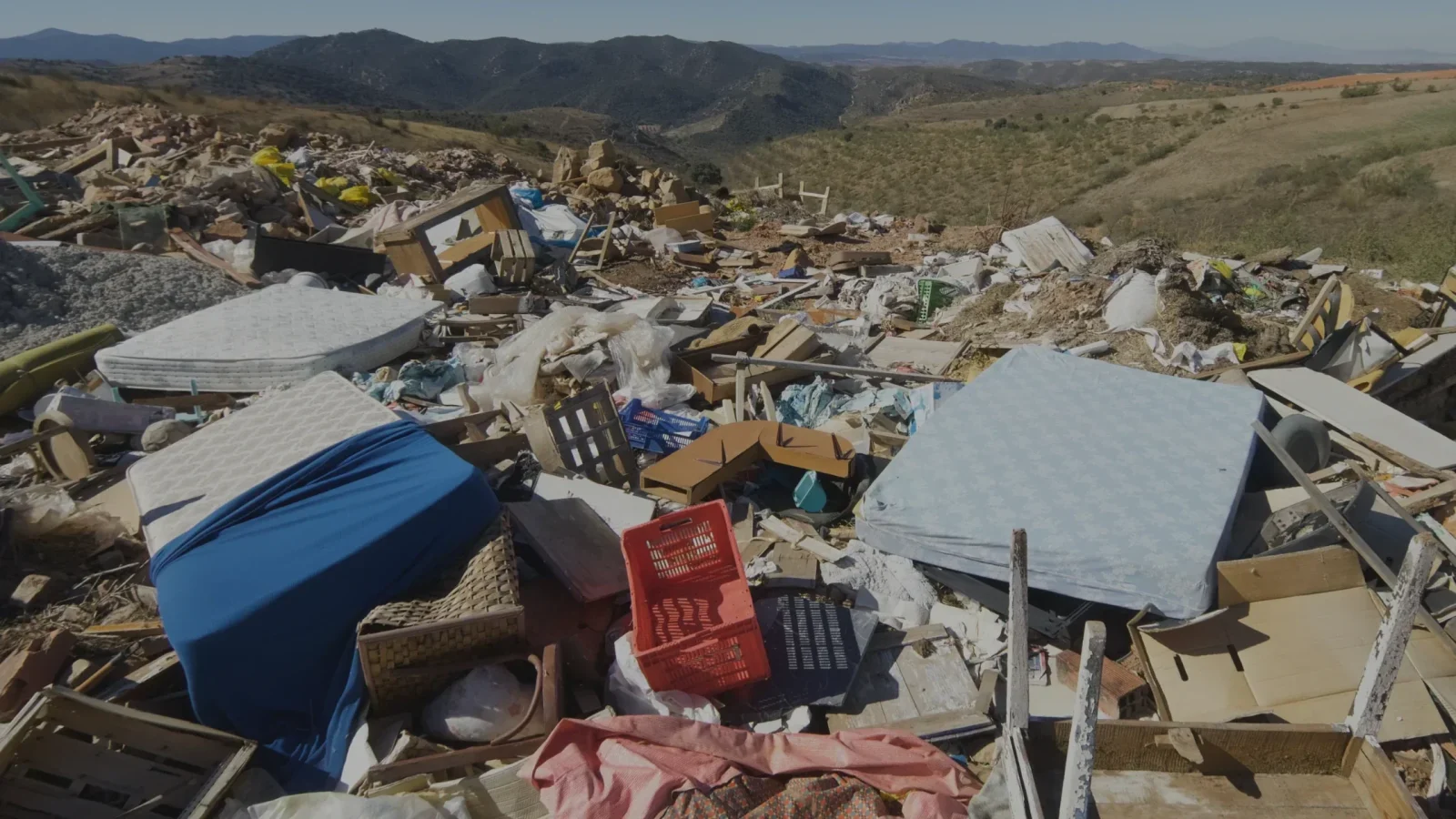
A single discarded mattress can linger in a landfill for decades, quietly taking up space and leaching problematic chemicals into the environment. With millions of mattresses added to landfills annually worldwide, this is not just a matter of clutter, it is an escalating environmental crisis.
The Growing Problem of Mattress Waste in Landfills
Scale and Scope of Mattress Disposal Globally
Each year, millions of mattresses are retired and discarded. North America alone is estimated to send over 20 million mattresses to landfills annually, with the global number stretching far higher. This mass disposal is not just about volume; each mattress is bulky, and once in a landfill, it resists compaction, quickly consuming precious landfill capacity.
Environmental Consequences of Mattress Decomposition
Mattresses are complex products, built from a mix of synthetic foams, fabrics, and metals. Because of this, they are slow to break down. As mattresses decompose, they can release a range of contaminants, including volatile organic compounds (VOCs) from foam and flame retardants, that migrate into both soil and groundwater. These substances can have lasting effects on ecosystems and even public health.
Why Do Mattresses Persist? Materials and Design Challenges
Standard mattresses contain polyurethane foam, steel springs, polyester, and cotton. None of these elements degrade quickly, and their combination further complicates decomposition. The structural design that makes mattresses supportive for sleepers, in turn, makes them remarkably durable against the elements.
Traditional Mattress Disposal Methods
Landfilling: Practices and Limitations
Most used mattresses wind up in landfills. Their size and resilience mean they often damage equipment or create voids that destabilize landfill operations. In many regions, landfill operators charge extra for mattress disposal, hoping to deter the problem.
Incineration: Benefits and Environmental Risks
Some municipalities pursue incineration, which reduces the volume of waste but brings its own issues. Burning synthetic materials releases toxins, including dioxins and furans, which pose air quality hazards unless sophisticated pollution controls are in place.
Exporting Waste: Global Implications
Sending mattress waste abroad is not a sustainable answer. Often, exported mattresses wind up in countries with fewer environmental protections, simply shifting the burden rather than solving it.
Innovative Recycling Solutions: A Comparative Overview
Mechanical Recycling Processes Explained
Mechanical recycling involves dismantling mattresses by hand or machine, separating steel, foam, and fibers for reuse. This method can recover as much as 85-90% of mattress materials, turning waste into resources for new products such as carpet padding or metal scrap.
Chemical Recycling: Emerging Technologies
Chemical processes are being developed to break down polyurethane foam into its building blocks for repurposing. These methods are promising but remain in early stages of commercialization, limited by cost and scalability.
Case Study: Recyc-Matelas’s Model in Canada
A standout example, Recyc-Matelas Canada, has recycled over 4 million mattresses by deploying innovative sorting and processing systems. Their approach not only diverts massive volumes from landfills in cities like Quebec, Toronto, and Montreal, but also sets a benchmark for environmental responsibility and operational efficiency.
Other Notable Recycling Initiatives Worldwide
Other regions, including parts of Europe and Australia, are piloting mattress recycling programs with varying degrees of success, often depending on local policy support and consumer participation.
Environmental Impact: Landfilling vs. Recycling
Decomposition Timeline and Toxicity in Landfills
A single mattress can take 80 to 100 years to fully decompose. During this time, it may leach chemicals and microplastics, threatening land and water quality.
Resource Recovery and Carbon Footprint Reduction
Recycling mattresses allows recovery of valuable materials like steel and foam, reducing the demand for virgin resources. The carbon savings are significant; recycling can cut emissions compared to landfilling or incineration.
Impact on Landfill Capacity and Longevity
Removing mattresses from the waste stream preserves landfill space, extending the operational lifespan of sites and reducing the frequency and costs of new landfill development.
| Disposal Method | Landfill Space Used | GHG Emissions | Material Recovery (%) |
|—————–|——————–|—————|———————-|
| Landfilling | High | High | 0 |
| Incineration | Low | Moderate/High | 5-10 |
| Recycling | Minimal | Low | 85-90 |
Economic and Social Dimensions of Mattress Waste Management
Cost Analysis: Landfilling Versus Recycling Programs
While landfill fees for mattresses are high due to handling challenges, recycling programs can be cost-competitive, especially when supported by extended producer responsibility (EPR) mandates.
Job Creation and Community Benefits from Recycling
Recycling mattresses creates local jobs for dismantling, sorting, and processing, supporting green employment and skill-building in communities.
Policy and Regulatory Frameworks Influencing Mattress Disposal
Progress hinges on supportive policies, such as landfill bans on mattresses, mandatory recycling, or EPR schemes that hold manufacturers accountable for product end-of-life.
Consumer Behavior and Its Role in Mattress Waste
Awareness and Attitudes Toward Disposal Options
Consumers often lack knowledge about recycling options or assume landfill is the only choice. Public awareness campaigns are crucial for behavior change.
Incentives and Barriers to Mattress Recycling
Barriers include a lack of convenient drop-off points and fees for recycling. Incentives, such as free collection or retailer take-back programs, can boost participation.
How Retailers and Manufacturers Can Influence Change
Retailers and manufacturers can offer recycling through delivery and take-back services, influencing both convenience and consumer choice.
The Future of Mattress Waste Management
Innovations on the Horizon
Continued research is unlocking new recycling processes, including automated deconstruction and chemical recycling at scale.
Scaling Recycling Infrastructure Globally
Building more dedicated recycling facilities and harmonizing policies will be vital to keep pace with global mattress disposal rates.
Toward a Circular Economy: Designing for End-of-Life
Designing mattresses for easy disassembly and recycling from the start is key for a long-term solution, closing the loop in manufacturing and waste.
Conclusion: Weighing the Options for Sustainable Mattress Disposal
The case for recycling over landfilling or incineration is clear: fewer emissions, more resource recovery, and extended landfill life. Stakeholders, from governments to manufacturers to consumers, all have a part to play. For communities searching for proven solutions, programs like Recyc-Matelas Canada offer a model to replicate. Now is the time for collective action and smarter choices to ensure tomorrow’s landfill sites are not overwhelmed by yesterday’s mattresses.